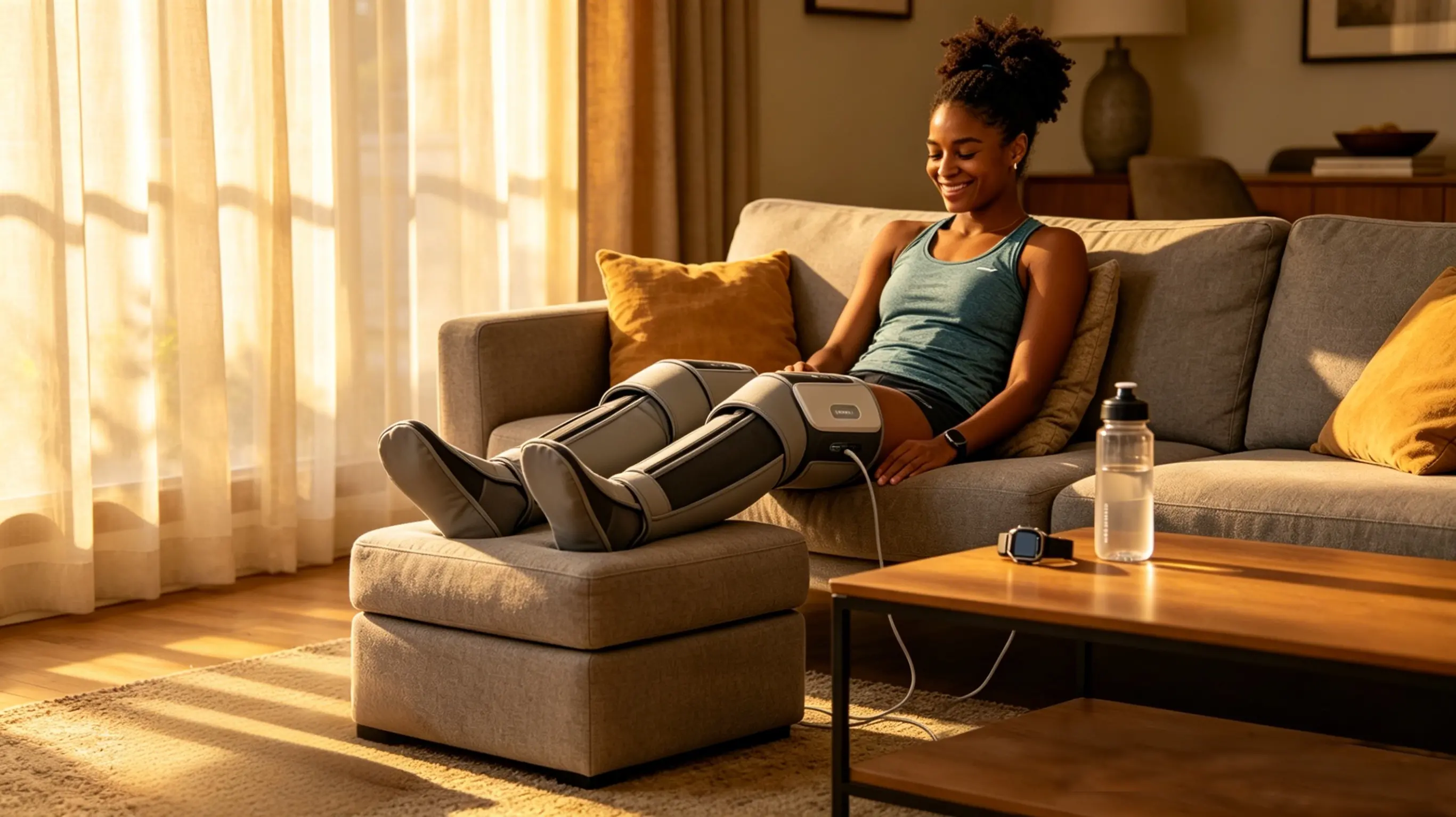
After a long run, the biggest issue is often not sharp pain. It is that heavy, sluggish, slightly swollen feeling that makes your legs feel harder to use than they should. A leg compression massager can help with that, but it is not a miracle recovery tool.
The real question is whether it is worth it for runners. For many people, the answer is yes, but only if you understand what it does well and what it does not do. It is best seen as a convenience-friendly recovery aid, not a replacement for sleep, nutrition, or smart training.
What It Actually Does
Leg compression massagers use sequential air compression. Air chambers inflate and release in a timed pattern, usually starting lower on the leg and moving upward. That creates a pumping effect that can support circulation and help reduce the heavy, tired feeling after training.
What matters most is the difference between feeling recovered and being fully recovered. These devices are most consistent at improving comfort, reducing perceived fatigue, and making legs feel less congested. They are less certain when it comes to producing major objective performance gains.
Automatic Leg Massager With Air Compression & Heat Therapy
£14.72 £22.68

What Caught Our Eyes
This lightweight massager integrates sequential air compression, ultrasound vibration and adjustable heat, with 4 switchable intensity gears. It comes in pink, gray, black plus extension straps for flexible fit, compact and travel-friendly.
Best For
Office workers, long-time standers, gym-goers and seniors with sore, swollen or restless legs, boosting blood circulation and easing post-training leg heaviness.
Things To Consider
It relieves fatigue and leg congestion well but delivers limited obvious athletic performance gains; stick to moderate heat intensity for long-time use.
Why Runners Use It
Runners tend to like compression massage because it is easy to use consistently. Stretching, foam rolling, and mobility work all take effort and attention. A compression session does not.
That matters because recovery tools only help if people actually use them. If you can sit for 15 to 20 minutes and recover passively, it is often easier to build that into a routine after runs, long sessions, or race days. For many athletes, convenience is a real part of effectiveness.
What The Evidence Suggests
The strongest case for compression devices is not that they dramatically boost performance. It is that they can help with soreness, perceived recovery, and lower-leg heaviness. Research and reviews generally support modest benefits, especially in subjective recovery measures.
That said, the effect is usually not dramatic. A compression massager may help you feel better going into your next session, but it should not be sold as something that completely removes DOMS or guarantees faster adaptation. The most honest claim is that it can make recovery more comfortable and more consistent.
Which Type Matters
You do not need to overcomplicate the product category. The main choice is between calf-focused models and full-leg systems.
Calf-focused models are lighter, cheaper, and easier to use every day. They work well if your main issue is tight or fatigued calves.
Full-leg systems cover the feet, calves, and thighs. They are better if your entire leg feels tired after long runs or hard training blocks.
If your fatigue is mostly localized, calf-only may be enough. If your legs feel generally beat up after mileage or races, full-leg coverage is usually the better pick.
What To Look For
There are four features that actually matter more than flashy extras.
Compression strength. The pressure needs to be strong enough to feel meaningful, and adjustable enough to stay comfortable.
Coverage. More coverage helps if you want whole-leg recovery, while smaller devices are fine for targeted use.
Ease of use. If setup is annoying, you will stop using it.
Comfort. You will be sitting still, so bulk, heat, and awkward fit matter more than most spec sheets suggest.
Fancy app features, preset names, or marketing claims matter less than whether the device feels good enough to use repeatedly.
When It Is Worth It
A compression massager makes the most sense if you run often, do long sessions, or regularly feel lingering leg fatigue between workouts. For someone running two or three times a week, it is optional. For someone running four or more times a week, it becomes more interesting.
It is most useful when recovery is the bottleneck. If your problem is not motivation but actually getting your legs to feel ready again, this kind of tool can be a practical addition. If recovery is already going well, it may be nice to have, but not necessary.
If you’re comparing options, platforms like Voghion make it easy to browse different types of massagers, from simple calf-focused designs to full-leg systems with stronger compression. You can quickly see different formats, styles, and price levels, then pick one that matches how you train and recover.
Final View
A leg compression massager is not essential, and it is not magic. But it does solve a real problem for runners: it makes recovery easier to stick with.
That is why it can be worth it. Not because it transforms performance overnight, but because it helps reduce the friction between one run and the next. For most runners, that is the part that matters.