
If you are getting a hamster for the first time, setting up the cage before your pet arrives is important. A well-prepared hamster cage helps reduce stress during the first few days and gives your pet a chance to settle in. Once they feel safe, taming becomes much easier.
How Big Should A Hamster Cage Be?
Organizations like the Blue Cross, PDSA, and Woodgreen recommend a minimum cage size of 100cm x 50cm x 50cm, which is roughly 775 square inches of floor space. But the exact size depends on the species.
Syrian Hamsters: at least 900 square inches (40 x 22.5 inches). The cage should also be at least 24 inches to fit a proper 11-12 inch wheel.
Dwarf and Chinese Hamsters: minimum of 700 square inches (40 x 17.5 inches) is recommended
Why Bigger Is Usually Better?
Many experienced owners go larger than the minimum. As you add enrichment over time, space fills up fast. A bigger cage gives you room for:
Multi-level platforms to add usable space
Different hides – Ceramic huts help hamsters cool down in summer while wooden onesprovide warmth in winter.
Enrichment items – Sand baths, digging boxes, and foraging areas all take up space. In a small cage, it is hard to fit everything.
Comparing Cage Materials: Glass / Acrylic, Wood, And Plastic
Material Comparison Table
Feature | Glass / Acrylic | Wood | Plastic |
Price | Highest | Moderate to High | Lowest |
Cleaning Difficulty | Lowest | High (Porous) | Low |
Hamster Preference | High | High | Low (Prone to chewing) |
Odor Control | Excellent (Non-porous) | Poor (Absorbs urine) | Good |
Replacement Frequency | 2–3 Years+ | ~1 Year | 1–2 Months |
Recommendation | Highly Recommended | Moderate | Not Recommended |
Glass and Acrylic Hamster Cages
A glass hamster cage or acrylic tank is widely considered the most practical and sustainable investment for long-term care.
Pros:
easy to clean
do not absorb urine or odors
Supports Natural Behavior
long-lasting for two to three years or more
eliminates the risk of dental damage or escape through gnawing
completely unobstructed view to observe your pet
Cons:
high price
heavy and difficult to move
Wood Hamster Cages
A wood hamster cage is often chosen for its aesthetic appeal and the naturalistic environment it provides.
Pros:
allowing hamsters to engage in instinctive climbing and gnawing activities
provide a warm, organic feel to the habitat
Cons:
absorbs moisture and urine, which often leads to persistent odors
easy for Hamsters to chew through wooden panels
must be replaced approximately once a year
Plastic Hamster Cages
While a plastic hamster cage is a common sight in pet stores, its utility is generally limited to short-term scenarios.
Pros:
the most budget-friendly option
easy to move and wipe down
Cons:
a hamster can gnaw through in just one or two months.
escape Risk for hamster.
Limited Lifespan
best reserved as a hamster travel cage or a temporary holding area during deep cleaning
Hamster Cage Setup: Bedding, Wheels, And Cage Accessories
A good cage needs more than just a wheel and a food bowl. Hamsters are burrowers, and they’re sensitive to temperature and environment.
Choosing the Right Bedding
Bedding should change with the season.
In warm weather (above 23°C or 73°F): wood shavings + aspen + paper pellets + walnut sand
In cold weather (below 23°C or 73°F): Switch to thick paper bedding, cotton nesting material, or aspen. The bedding should be at least twice the length of your hamster’s body.
A note on walnut sand: Some hamsters are sensitive to dust. Try regular bath sand first. If your hamster sneezes, skip the walnut sand.
Wheels: Go Big
Wheel size is not optional. A wheel that’s too small forces your hamster to arch its back, which can cause spinal problems over time. So get the largest wheel that fits your cage.
If the wheel is noisy at night, you can tuck a bit of cotton or paper between the wheel and the cage wall.
Other Hamster Cage Accessories You’ll Need
Tunnels: Use clear or semi-transparent tunnels so you can see if your hamster gets stuck. Opaque tunnels make it harder to check on them.
Hideouts: Swap these out depending on the season. Ceramic or glass hides work well in summer because they stay cool. In winter, use wooden huts or cotton nests for warmth.
Sand bath: One sand basin is enough. Fill it deep—at least twice your hamster’s height—so they can roll around and groom properly.
Platforms and ladders: If your cage has multiple levels, add ramps or platforms. This gives your hamster more to explore and helps prevent boredom.
Chew toys: Offer a few different types. Hamsters have preferences, and variety helps them wear down their teeth naturally.


 Hamster Chewing Braided Ball
£28.79 £43.54
Buy the Same Chew Toy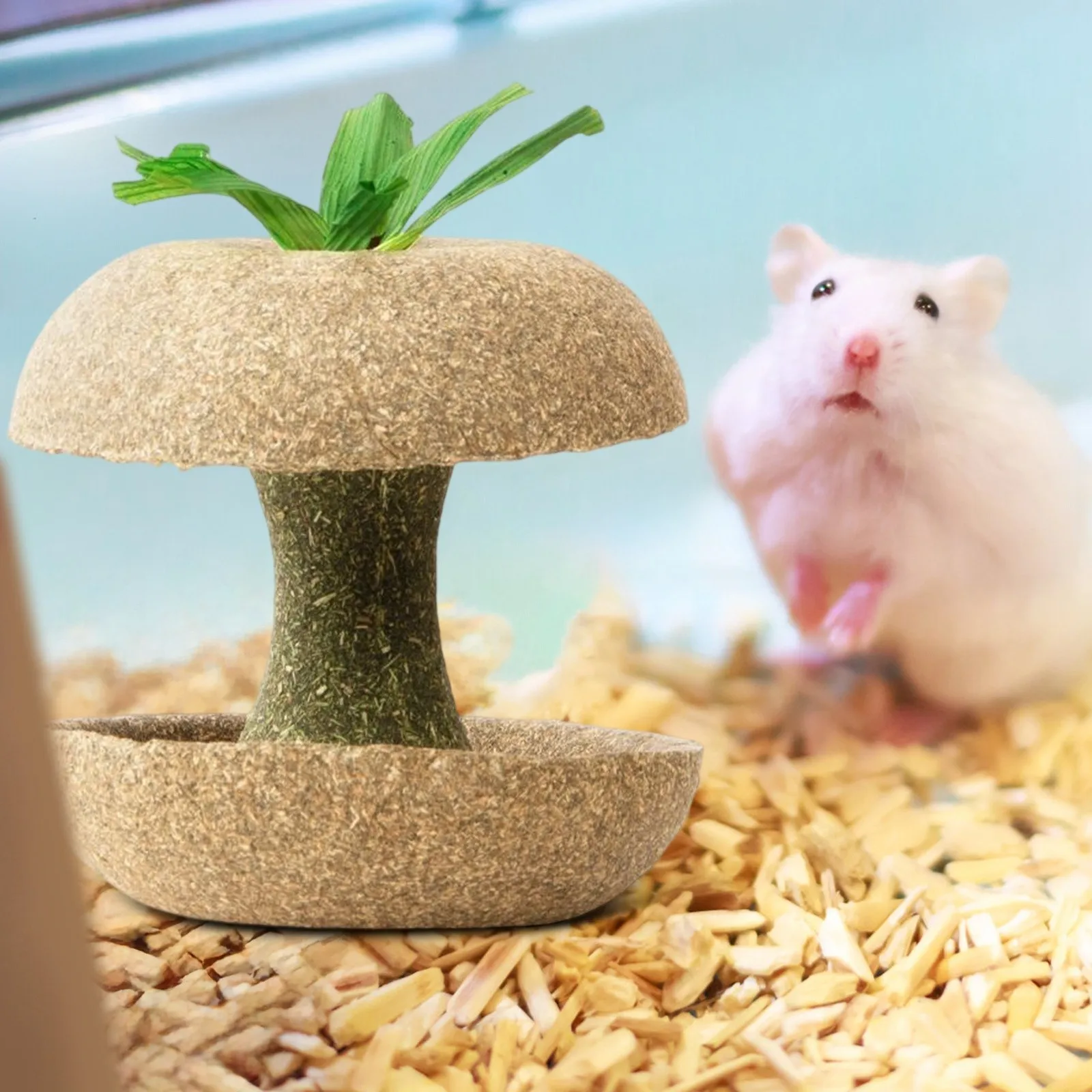 Hamster Chew Toys For Teeth, Grass Biscuits
£29.26 £41.09
Buy the Same Chew ToyHow To Clean A Hamster Cage Without Stressing Your Pet
How Often Should You Clean a Hamster Cage?
Bacteria and mold grow faster in warm, humid conditions, so your cleaning schedule should shift with the seasons. If you are busy, you can just remove soiled bedding and check for food your hamster has hidden under the substrate.
Winter:
Spot clean every 10-12 days.
Full deep clean every 45-60 days
Summer:
Spot clean every 5-7 days
Deep clean every 25-40 days
Step-by-step Cleaning Guide
When it’s time for a deep clean, follow these steps:
1. Move your hamster. Place them in a safe temporary container or travel cage while you work.
2. Empty the cage. Take out all accessories, toys, and bedding. Check the corners, since urine tends to build up there.
3. Rinse with plain water. Use lukewarm water to rinse the cage. Focus on spots with visible urine stains.
4. Skip the cleaning products. Avoid disinfectants, detergents, and scented soaps. Hamsters have a strong sense of smell, and leftover fragrance can stress them out. Plain water works for most cleanings. Or you can use pet cleaning wipes to clean the cage.
5. Dry everything. Wipe all surfaces with paper towels. The cage must be fully dry before you add new bedding—any trapped moisture can lead to mold.
6. Set it back up. Put the accessories and hideouts back in. To help your hamster readjust, mix a little of the old, unsoiled bedding into the fresh substrate. The familiar scent makes the transition easier.
FAQ
Why does my hamster keep hiding in the corner of its cage?
Hamsters naturally love to burrow into deep bedding and often store food in the corners of their enclosure. These behaviors help them feel secure and are completely normal.
However, if your hamster spends long periods lying in a corner and rarely comes out to run on its wheel, explore, or drink water, it's worth keeping an eye on its overall condition. Check for signs such as a swollen abdomen, red or irritated eyes, or cracked paw pads, as these may indicate an underlying health issue that requires attention.
Do hamsters need a night light near their cage at night?
No, hamsters do not need a night light. In fact, they are naturally nocturnal and are most active in low-light conditions. Keeping the room dark at night helps support their normal sleep-wake cycle.
What are the signs that a hamster is too cold?
When your hamster feels cold, its body and craws may feel cool when you touch it. It may also sleep for more than 24hours and be hard to wake up. If the temperature drops below 65°F (18°C), hamsters may enter torpor.