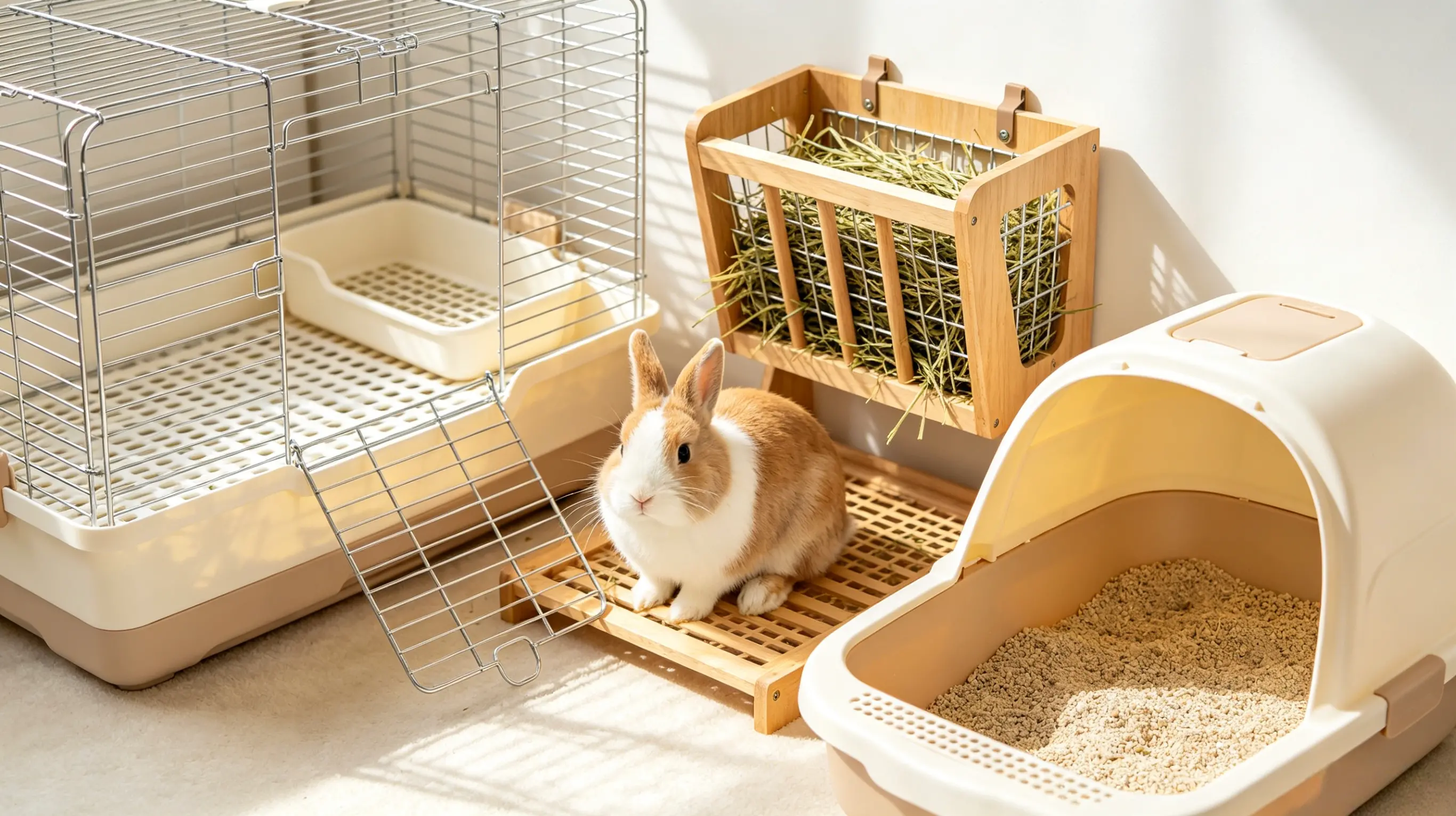
Bringing a rabbit home is exciting, but many first-time owners quickly realize they are not sure what to buy—or worse, they buy the wrong things. Rabbits have specific needs, and setting things up correctly from the start makes a huge difference in their health and behavior.
This simple checklist covers the essential rabbit supplies you actually need, plus a few common items you should avoid.
1. Housing Essentials
Your rabbit’s living space is one of the most important decisions you will make.
A traditional cage might seem like the obvious choice, but many are far too small. Rabbits need room to move, stretch, and hop freely. Instead of a small cage, a playpen or exercise pen is often a better option. It gives your rabbit more space and can be adjusted as needed.
You should also include a hideout or small shelter inside the enclosure. Rabbits are prey animals, so having a safe place to retreat helps reduce stress and makes them feel secure.
When choosing flooring, avoid wire bottoms. These can hurt your rabbit’s feet over time. A soft mat or solid surface is much safer.
Foldable Cage for Rabbits & Hamsters
£21.08 £29.32

Why We Like It
It feels much more practical than the tiny plastic cages you often see for rabbits and hamsters. The mesh sides give better airflow, and the foldable design makes it easy to move or store when needed. I’d use this more as a comfortable temporary setup or quiet resting space, especially for pets that get stressed easily.
Pet Fence DIY for Rabbit Cage
£60.39 £95.84

Why We Like It
I love this DIY iron-mesh pet fence because it lets me build a space exactly how I want for my rabbits and cats. The panels are sturdy yet lightweight, and I can rearrange or expand them whenever needed. Unlike fixed cages, this gives my pets room to hop, stretch, and explore safely, while still feeling secure inside.
2. Feeding Supplies
Feeding is not just about giving food—it is about giving the right kind of food in the right way.
The most important part of a rabbit’s diet is hay. In fact, hay should make up about 80–90% of what your rabbit eats. A hay feeder helps keep it clean and easily accessible, which encourages consistent eating.
For pellets and vegetables, use a heavy ceramic food bowl. Lightweight bowls are easy to tip over, which can create mess and waste.
Water is another area where many owners make mistakes. While water bottles are common, a water bowl is often the better choice. Rabbits can drink more naturally from a bowl, which helps them stay properly hydrated. If you do use a bowl, choose one that is sturdy and hard to tip.
Bunny & Guinea Pig Hay Feeder Rack
£49.82 £78.57

Why We Like It
The rabbit hay feeder helps keep hay cleaner and less wasted compared to simply scattering it around the enclosure. The pink plastic fits nicely into most rabbit spaces without feeling bulky. It also encourages rabbits to pull hay out slowly while eating, which feels much closer to their normal feeding habits.
Material Notes
The feeder uses a lightweight plastic frame with metal wire sections. It feels lightweight enough to move around easily but still stable for everyday feeding use.
3. Litter Setup
Rabbits can be litter-trained, which makes your life much easier—but only if you set things up correctly.
Start with a litter box that is large enough for your rabbit to comfortably sit and turn around in. Many people use small boxes, but bigger is almost always better.
Inside the litter box, use rabbit-safe litter such as paper-based or wood-pellet litter. Avoid clumping or scented cat litter, as these can be harmful if ingested.
You can also place hay near or inside the litter box. Rabbits often like to eat while they use the bathroom, and this helps reinforce good litter habits.
A small scoop is useful for daily cleaning, though this is more of a convenience than a necessity.
![A [heightened fence] off-white + wire mesh, comes with extra-large shovel litter tray for rabbits and small dogs for small...](https://g-images-process.voghion.com/?bucket=voghion&image=productImages%2F128_1774409075586_voghion800x800.jpeg&format=webp&resize=%7B%22width%22%3A606%7D) Litter Tray for Rabbits and Small Dogs
Litter Tray for Rabbits and Small Dogs
£13.51 £27.58
Shop at Voghion![A large flat-top dog toilet with metal frame [deep sea blue] rabbit litter box with grate for pet for small pet playtime](https://g-images-process.voghion.com/?bucket=voghion&image=productImages%2Fb039006ee46c6ae3378b4323b596b9ba_voghion800x800.jpg&format=webp&resize=%7B%22width%22%3A606%7D) Rabbit Litter Box with Grate for Pet
Rabbit Litter Box with Grate for Pet
£20.25 £29.92
Shop at Voghion![A [60cm extra large capsule size] sunlight orange plastic rabbit litter box pet supply for small pet playtime](https://g-images-process.voghion.com/?bucket=voghion&image=productImages%2Fe974f37627513a77b401c22747811040_voghion800x800.jpg&format=webp&resize=%7B%22width%22%3A606%7D) Plastic Rabbit Litter Box Pet Supply
Plastic Rabbit Litter Box Pet Supply
£21.26 £29.29
Shop at Voghion4. Enrichment and Basic Care
Rabbits are intelligent and active animals, and they need mental stimulation to stay happy.
Chew toys are essential. Rabbits’ teeth grow continuously, so they need safe materials to chew on. Without proper chew toys, they may start chewing furniture, wires, or other household items.
Simple items like untreated wood toys, hay-based toys, or cardboard can work well.
Basic grooming tools are also helpful. A brush can reduce shedding and prevent hair ingestion, while a nail clipper helps keep their nails at a safe length. You do not need anything fancy here—just reliable, rabbit-safe tools.
What To Skip
Knowing what not to buy is just as important as knowing what you need.
Many first-time rabbit owners make similar mistakes, often because of misleading pet store products.
Small cages: Most cages sold in stores are too small for a rabbit’s daily needs. Lack of space can lead to stress and health issues.
Wire-bottom cages: These can cause sore hocks (foot injuries) and should be avoided entirely.
Cat litter: Especially clumping or scented types, which can be toxic if ingested.
Too many pellets: Pellets should only be a small part of the diet. Overfeeding can lead to obesity and digestive problems.
Water bottles (as the only source): While not completely wrong, they are not ideal as a primary water source. Bowls are generally better for hydration.
The Takeaway
You do not need to buy everything at once or spend a lot of money to create a good setup. Focus on the essentials: space, proper diet, a safe litter system, and basic enrichment.
If you get these right from the beginning, your rabbit will be healthier, more active, and much easier to care for.