The first rabbit cage I set up indoors looked completely fine—until I actually started living with it.
It fit the space, it looked neat, and on paper everything was there. But within a few days, small things started to feel off. The rabbit didn’t really move much inside it. Hay kept getting pulled out and scattered around. Cleaning it felt more frequent than I expected. Nothing was dramatically wrong, but it didn’t feel like something that could work long term.
That’s usually the point where the idea of a “rabbit cage indoor” setup starts to shift. It stops being about just having a cage, and turns into figuring out how the rabbit actually uses the space.
Cage Size: How Much Space a Rabbit Actually Needs
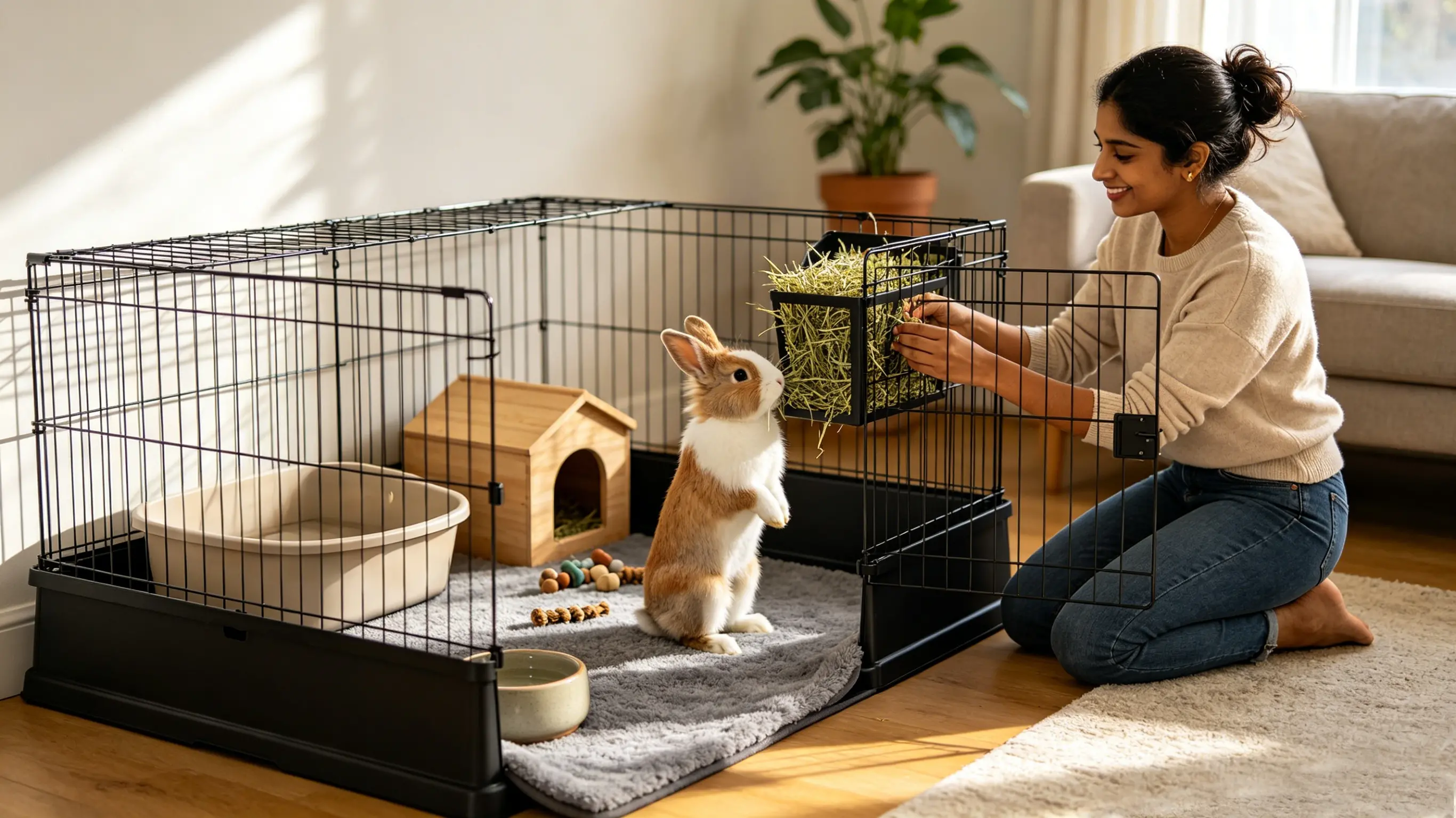
One thing that becomes obvious pretty quickly is that most cages are smaller than they should be. Not in a “this is unusable” way, but in a “this feels limiting after a while” way. If a rabbit stretches out and almost touches both sides, or stands up and gets close to the top bars, the space technically works—but it doesn’t give them much room to move naturally. A more realistic baseline is giving them enough room to stretch fully, sit upright comfortably, and take a few hops without immediately hitting a wall. In real terms, that often ends up being something closer to 100–150 cm wide, sometimes more depending on the rabbit.
That’s also why a lot of indoor setups don’t stay as just a cage. People start with one, then add a small pen around it, then maybe a mat outside—and before long, the “cage” is just one part of a slightly larger area. Not because they planned it that way, but because it works better.

![A [70cm height] double door lock anti-escape pet fence small pet protective height cage for small pet playtime](https://g-images-process.voghion.com/?bucket=voghion&image=productImages%2F78193c687107e9ff16be280918723571_voghion800x800.jpg&format=webp&resize=%7B%22width%22%3A1212%7D)
Choosing the Right Materials for Hygiene and Comfort
Materials are another thing you don’t really think about until they start causing problems.
A plastic base sounds fine until it starts holding onto smell.
Wire flooring looks clean but isn’t great for their feet over time.
Wood seems natural, but if it’s not sealed, it absorbs everything.
Rabbits chew, dig, and sit in the same space every day, so the materials end up affecting both hygiene and comfort more than expected. Solid plastic trays are still the easiest to clean, metal bars hold up well against chewing, and anything soft under their feet—like a mat or fleece layer—makes a noticeable difference. Bare wire floors are one of those things that seem convenient but usually get replaced once you see how rabbits actually stand and rest.
Layout Basics: Where Things Should Go
Inside the space, it’s less about how much you add and more about where things go. A litter box almost always ends up in a corner, whether you plan it or not. The moment you put hay right next to it, things get easier—less mess, less confusion, and better habits overall.
Water is another small decision that ends up mattering. Bottles are common, but many people switch to a heavier bowl just because it’s easier for the rabbit to use and doesn’t restrict how they drink.
The rest is pretty minimal. A place to hide or rest, something safe to chew, maybe a slightly raised surface. It doesn’t need to be filled with accessories. Rabbits tend to use space in a simple, repetitive way, so a clean layout works better than a crowded one.
 Heavy Ceramic Rabbit Food & Water Bowl
£10.31 £20.88
Shop at Voghion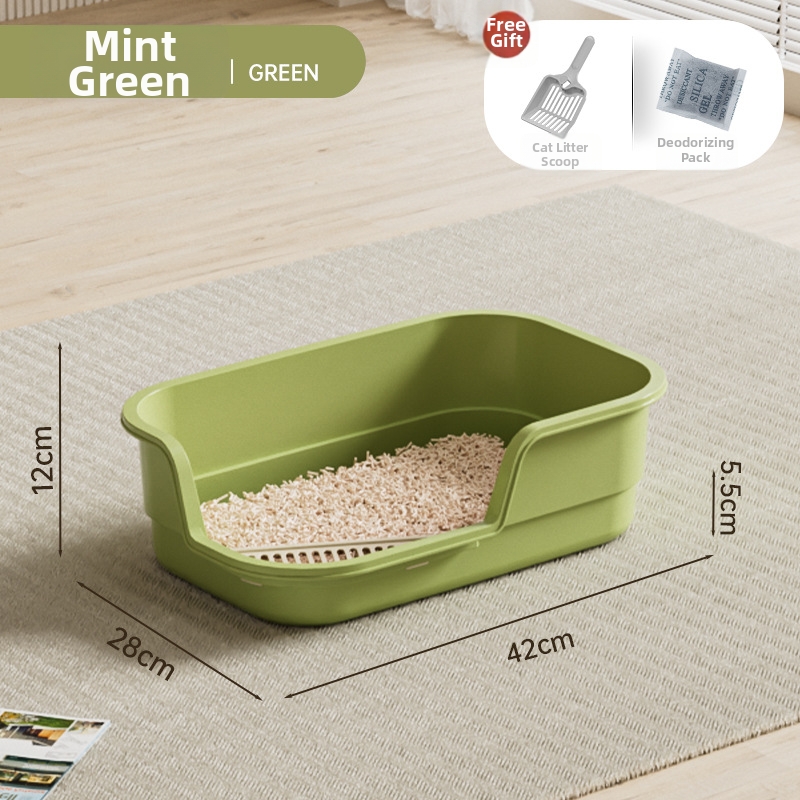 High-Sided Rabbit Litter Box for Indoor Use
£17.22 £28.05
Shop at VoghionCommon Setup Problems (and Simple Fixes)
What usually makes the biggest difference isn’t adding more things—it’s fixing small layout issues. When hay is too far from the litter box, it gets dragged everywhere. When there’s nothing outside the cage to catch it, it ends up on the floor. When surfaces aren’t easy to wipe or wash, everything feels like more work than it should be. Once those small details are adjusted, the whole setup becomes easier to live with.
At some point, it stops feeling like “a cage” entirely. It becomes just part of the room—a defined space that the rabbit uses, but not something that feels separate from everything else.
If you’re still figuring out what setup makes sense, it actually helps to look at different combinations instead of just individual cages.
Platforms like Voghion make it easier to shop for bunny essentials, since you can compare enclosures, playpens, litter setups, and accessories in one place. It’s less about finding one perfect product, and more about understanding how the pieces fit into something that works day to day.
In the end, a good indoor rabbit setup isn’t the one that looks best at the beginning. It’s the one that still feels easy a few weeks later—when cleaning is routine, the rabbit moves comfortably, and nothing feels like it needs constant fixing.