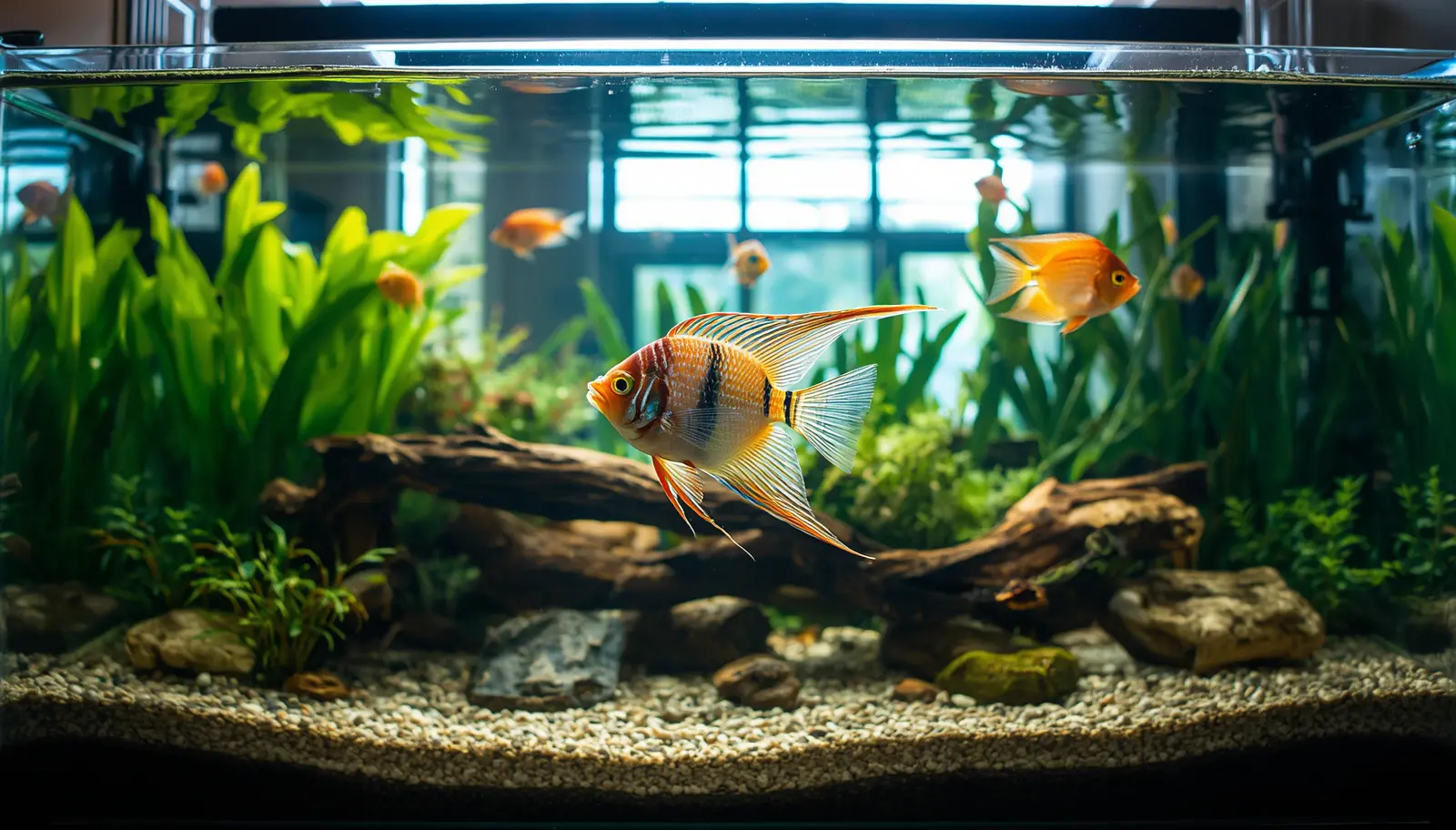
Angelfish do best in a 30-gallon tank with water around 76–82°F. They’re a good fit for dedicated beginners. In this guide, you’ll get the basics for angelfish—lifespan, social behavior, and the best tank mates—to help your aquatic pets live longer and healthier.
Is Angelfish Right For You? Ask Yourself:
Do you want interactive pets?
Angelfish recognize their owners and will swim to the front glass when you approach—especially at feeding time. If you enjoy pets that respond to you, they’re a great fit.
Is your tank tall enough?
Your tank needs at least 18 inches (45 cm) of height for them to swim comfortably. Standard shallow tanks stress them.
Are you interested in fish behavior?
Beyond their striking silhouettes, angelfish have a surprising amount of "inner life" that makes them a joy to watch. They are highly social creatures that establish clear pecking orders. You’ll even start to notice their shifting moods; for instance, they’ll flare their fins as a bold warning when they’re feeling feisty or annoyed. Honestly, getting to know their individual quirks and "personalities" is more than half the fun of keeping them.
Can you commit to weekly care?
They’re hardy if you:
Do 25% water changes weekly
Test water regularly (ammonia/nitrites = deadly)
Avoid overcrowding
In Short
Ideal if you want engaging, graceful fish and can provide a tall tank + consistent care. Not recommended for tiny tanks or hands-off owners.
3 Things You Should Know About Angelfish
How Long Do Angelfish Live and What Affects Their Lifespan?
In a well-kept home aquarium, these cichlids usually live 10 to 15 years. Their longevity depends on stable water conditions and a low-stress environment.
How To Spot A Healthy Fish?
Clear eyes, upright fins
Strong appetite, active swimming
Never gasping at surface
Most premature deaths happen due to poor water quality. Ammonia spikes and high nitrate levels are the biggest culprits. Constant stress from aggressive tank mates also drastically shortens their life.
Are Angelfish Aggressive? Behavior Explained
Many experienced hobbyists describe angelfish as "graceful bullies." In our experience, their personalities can vary a lot. Some stay calm in a community tank for years, while others suddenly become territorial and stake out their own space.
Providing plenty of tank decor, such as hiding spots and tall plants, helps manage these social tensions. It’s a simple adjustment that often keeps the tank more balanced.
How can you tell if an angelfish is hungry? Do they need daily feeding?
When angelfish are hungry, they tend to gather near the surface as soon as you approach the tank. It can feel like they’re "asking" for food.
Feeding once or twice a day works well. Keep portions small enough to finish within a couple of minutes. This helps prevent leftover food, which can quickly affect water quality.
Setting Up Your Angelfish Aquarium Environment
Creating a stable environment is the most important part of angelfish care. These fish are sensitive to changes in water. You should maintain specific parameters to keep them healthy over the long term.
Optimal Water Parameters for Health & Longevity
According to temperature data and hobbyist standards from Thermometer World, here are the essential water parameters for your aquarium.
Factor | Ideal Range |
Temperature | 76-82°F (24.5-28°C) |
pH | 6.0 - 7.5 |
Hardness | 4-12 dGH |
To be precise, we recommend using a reliable digital heater paired with an accurate aquarium thermometer to avoid “thermal shock,” which can happen with even a small 2-degree change.
 Quick-Read External LCD Thermometer
£10.69 £14.87
Shop at Voghion High-Precision Submersible Probe Thermometer
£23.83 £23.06
Shop at Voghion Multi-Enclosure Waterproof Probe Set
£27.66 £37.76
Shop at VoghionAdvanced Filtration and Water Care
Angelfish produce a significant biological load as they mature. A high-quality canister filter is ideal for larger tanks. Make sure the filter flow isn’t too strong; these fish prefer calmer waters due to their large, flowing fins.
Regular maintenance is key. Do a 25% water change every 7 days. This helps remove nitrates and replenish essential minerals. Use a gravel vacuum during each water change to clean the substrate. This prevents waste from decomposing and releasing toxic ammonia.
Choosing the Right Tank Decorations
The right decor provides security and mimics the natural Amazon environment. Angelfish love vertical structures that match their body shape.
Live Plants: Amazon Swords are the perfect choice. They have broad leaves that provide excellent cover and spawning sites.
Driftwood: Natural driftwood adds beneficial tannins to the water. It also helps maintain a slightly acidic pH level.
Safe Rocks: Use smooth river stones to prevent fin injuries. Avoid rocks with sharp edges that could tear their delicate scales.
Open Swimming Space: Place tall plants at the back and sides. Leave the center of the tank open for active swimming.
Mossy Hollow Tree Tunnel Aquarium Hideout Ornament
£22.38 £37.52

Why We Like It
Transform your aquarium into a lush, natural underwater forest. Featuring lifelike bark textures and vibrant mossy accents, this hollow log blends seamlessly into any professional or hobbyist aquascape. The spacious tunnel design provides a much-needed sanctuary for shy fish and even small reptiles to rest, hide, and explore.
What Fish Can Live With Angelfish?6 Best Tank Mates For Angelfish
Based on habitat needs and behavior, these six species are excellent choices for a freshwater setup:
Rummy Nose Tetras:
These guys are bigger than most tetras. Their schooling creates a striking contrast and they don’t trigger predatory instincts.
Corydoras Catfish:
These peaceful bottom-dwellers keep the substrate clean. They stick to their own area of the tank and don’t bother the other fish.
Mollies and Platies:
These are sturdy, active, and peaceful. Their size fits nicely with adult cichlids.
Zebra Danios:
They’re incredibly fast and hardy. Their constant motion adds energy to the tank while staying out of the way of aggression.
Dwarf Cichlids (like Bolivian Rams):
These share a common ancestry but stay small and peaceful. They do well in larger, planted tanks.
Discus:
For serious hobbyists with bigger tanks, Discus are majestic companions. Make sure the water stays steady at 82°F (28°C).
Frequently Asked Questions About Angelfish Care
Can angelfish recognize their owners?
Yes, these intelligent fish can tell their owners from strangers. They often swim up to the front of the glass when they see a familiar person. This behavior usually comes from feeding time.
What are the signs of stress in angelfish?
Watch for clamped fins—fins pressed tight against the body. Other signs include gasping at the surface or losing their vibrant color. Hiding a lot behind decorations is also a common sign of poor health.
Can angelfish live with guppies?
Generally not. Adult angelfish often chase small guppies once they’re full-grown. In addition, the flowing fins of male guppies can trigger nipping from the angelfish.
What are the bad tank mates for angelfish?
Stay away from fin-nippers and very aggressive neighbors. Tiger Barbs are well known for this. You should also avoid Bettas and Fancy Goldfish, since those long fins can attract the angelfish as rivals.