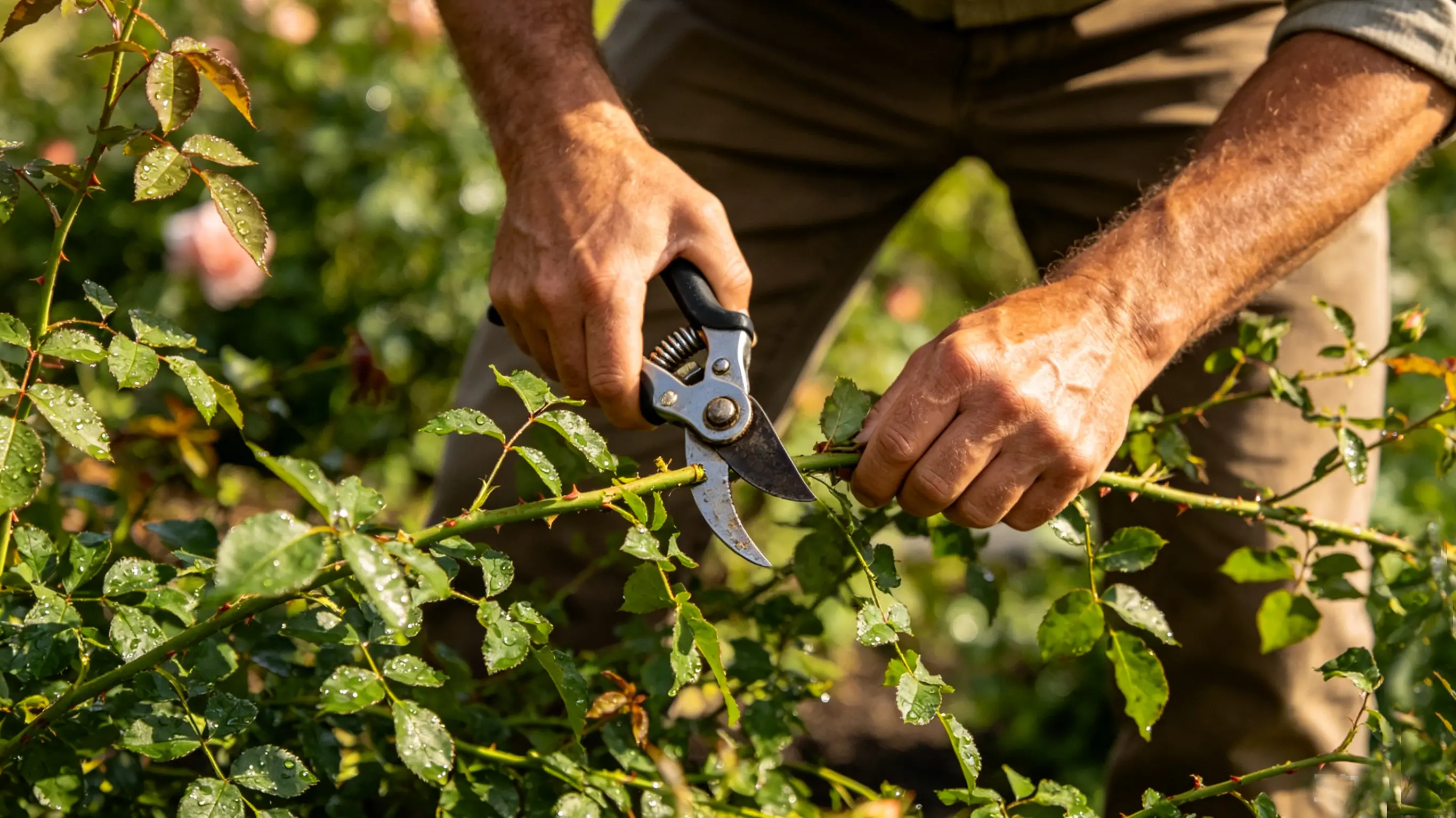
The biggest mistake with rambling roses is pruning them like climbing roses—or worse, cutting too much and wondering why there are fewer flowers next summer. Many rambling roses flower on stems produced the previous season, which is why timing matters so much. Prune too hard at the wrong moment, and you may accidentally remove much of next year’s display.
A rambling rose does not need to be tidy or compact. What it really needs is an open, airy structure that lets light and air move through. When you prune with that goal in mind, you can keep the plant generous and romantic without turning it into an unmanageable tangle.
When to Prune a Rambling Rose
For most rambling roses, the best time to prune is after flowering, usually in late summer or early autumn. This is because many varieties flower on stems that grew the year before. If you cut those stems back hard in spring, you are removing the branches that were just about to bloom.
By waiting until the main flush is over, you can see which shoots carried flowers and which ones are new and empty. After the plant has finished flowering, it shifts energy back into roots and basal growth, so cutting then does not usually reduce next year’s performance. If you live in a colder climate or you missed that window, you can still do light structural work in late winter or early spring, but avoid heavy pruning in late summer where heat or drought might stress the plant.
What a Rambling Rose Needs Most
Before pruning starts, having the right setup nearby makes the whole job feel less frustrating. Thick gardening gloves are especially worth it with rambling roses—their long stems and hidden thorns tend to catch hands when you least expect it. Clean, sharp secateurs matter too, since rough cuts can damage healthy growth. If you are working around a pergola or larger structure, even a simple garden tool bag can save repeated trips back and forth.
 Gardening Gloves for Planting & Pruning
£9.53 £12.06
Shop at Voghion Gardening Pruning Shear
£9.47 £13.04
Shop at Voghion Gardening Leather Tool Belt
£17.33 £23.52
Shop at VoghionFocus On 3 Jobs In Most Pruning Sessions
remove dead, weak, damaged, or diseased stems,
clear out branches that are crossing and rubbing,
and simplify any dense center where air and light cannot move freely.
By doing this, you are not just tidying the rose; you are protecting it from pests, diseases, and poor flowering. The goal is to leave a plant that still looks lush from a distance but feels light and open when you look inside.
Step‑by‑step Pruning Tips
Loosen the bindings first. Gently untie the stems from the wall, pergola, arch, or tree so you can see what you are working with. This also helps you assess which branches are truly needed and which ones are just clutter.
Identify the old wood. Look for thick, dark, sometimes shaggy stems that may have produced flowers in previous years. These are often the candidates for removal if they are not strong or healthy.
Cut away dead or weak growth. Use clean, sharp secateurs and cut these stems back to the base or to a healthy side branch. This keeps the plant clean without wasting energy on dying tissue.
Sort the main framework. Decide which younger, vigorous stems will form the new backbone. Aim for several main branches that run in different directions, not clustered in one spot.
Tie in and spread out. After the cuts, gently re‑tie the chosen stems so they lie more horizontally along the support. Horizontal or slightly angled stems encourage more side shoots and flower buds than those that go straight up.
Shorten side branches. Lightly trim back any side shoots that are very long or crowded. You do not need to cut them far back; just enough to reduce congestion and improve airflow.
This sequence keeps the process logical and prevents you from cutting too much at once. If you are unsure, it is better to under‑prune than over‑prune in the first season.
How Much To Cut Back
Most rambling roses respond well to selective pruning rather than heavy cutting. Beginners often worry that they must cut everything back hard, but that is usually unnecessary and can actually delay flowering. For a mature rambler, it is often enough to:
remove about one‑third of the oldest stems,
thin out the middle so light reaches the center,
and keep the main arms of the plant intact.
If the plant is very overgrown and has been neglected for years, you can take a more radical approach. One strategy is to remove the oldest third of the stems in the first year, the next third in the following year, and so on. This gradual renewal keeps structure and flowering strength at the same time.
After heavier pruning, many gardeners find it helps to give the plant a little support going into the next growth cycle. Deep watering, fresh mulch, or a rose-friendly fertilizer can encourage stronger recovery, especially if the rambler has been neglected or heavily reshaped.
 High-Pressure Water Gun Garden Hose
£19.22 £31.50
Shop at Voghion Durable Rubber Hose for Gardening
£29.63 £38.34
Shop at Voghion Garden Tool Sets
£25.63 £38.68
Shop at VoghionCommon Mistakes To Avoid
There are a few pitfalls that can turn pruning into a frustration:
Ignoring the base: If you only cut the top and outer branches, the bottom can stay bare and weak. Make sure to check the base and remove any dead or crossing stems all the way down.
Cutting too hard on young plants: A newly planted rambler usually needs light guidance, not heavy pruning. Let it build roots and establish a framework before you start cutting back forcefully.
Forgetting to tie properly: After pruning, loose stems will flop back into the same crowded shape. Re‑tie them so they spread along the support instead of clustering.
Not pruning at all: A rambler left entirely alone can develop a dense mass that flowers mainly on the edges while the center stays leafless and weak.
Keeping these points in mind will help you avoid both the “too much” and the “too little” extremes.
Final Check Before You Tie It Back In
Before you finish, step back and look at the plant from a distance. Ask yourself:
Can you still see the structure of the support behind it?
Is there enough space between the main stems for air and light?
Are there any branches that still look weak or tangled?
If the answers are mostly yes, you are on the right track. Then gently re‑tie the selected stems, making sure they are not too tight and that they follow the line of the support. A well‑pruned rambling rose should feel a little more open and lighter, but still unmistakably full and generous.
Pruning a rambling rose is not about controlling it into neatness. It is about guiding its wild energy so it can grow in a way that suits your garden, your structure, and your style. Once you treat it as a flexible framework rather than a solid mass, pruning becomes less intimidating and more rewarding.
A good pruning routine starts with the right tools. Whether you need pruning shears, gardening gloves, plant ties, watering equipment, or other outdoor essentials, you can shop more garden tools on Voghion to make seasonal rose care easier and more organized.