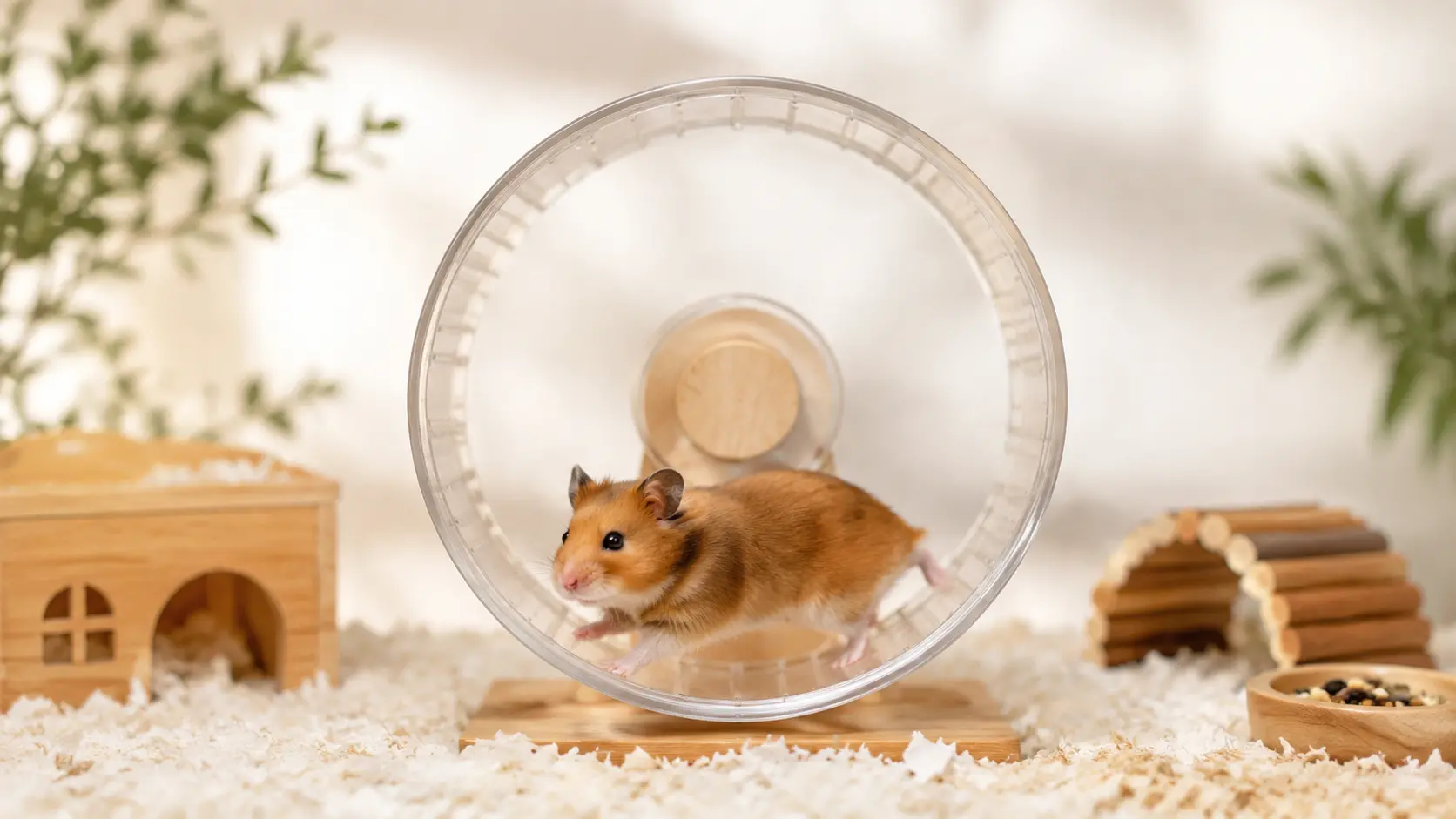
If you have been jolted awake at 3 AM by the frantic clack-clack-clack of a plastic wheel hitting the bars, you know choosing the best hamster wheel is vital for your sanity and your pet’s health.
You likely have questions before buying or during use. We gathered the 12 most frequent queries from our community. These answers rely on the practical experience of seasoned keepers to help you navigate the world of hamster exercise.
1. Do Hamsters Really Need A Wheel?
Yes, they absolutely do. In the wild, hamsters travel miles every single night foraging for food. Without a proper hamster exercise wheel, they become "cage-crazy," often leading to repetitive bar-biting or lethargy.
According to the Royal Society for the Prevention of Cruelty to Animals (RSPCA), hamsters need regular exercise and environmental enrichment, including access to a properly sized running wheel. The organisation highlights that hamsters are naturally highly active at night, often travelling long distances in the wild, which makes a wheel an important part of their daily welfare in captivity. This guidance is widely referenced in hamster care to support both physical health and natural behaviour.
2. Can Baby Hamsters Use Exercise Wheels?
Young hamsters have endless energy and definitely need to move. If you’re on a budget, my advice is to buy a large hamster wheel from the start. They grow incredibly fast, and there’s no point buying a tiny "starter" wheel that you’ll have to bin in three weeks once they outgrow it.
3. What Size Wheel For Syrian Hamster Or Dwarf Breeds?
If you are wondering what size wheel for Syrian hamster is appropriate, follow these simple guidelines:
The bigger the wheel, the better.
Syrians: Use a minimum 12-inch giant hamster wheel.
Dwarfs: Use at least an 8-inch large hamster wheel.
Ensure a completely flat running posture.
4. Are Mesh Or Wire Wheels Actually Dangerous?
Honestly, they are a nightmare. We strongly advise against mesh or wire designs because they are notorious for causing "bumblefoot" (painful infections) or even snapped limbs if a foot gets caught.
Always opt for a wheel with a solid, flat running surface. It’s much kinder on their paw pads.
5. Wooden Vs. Plastic: Which Material Is Best?
This material debate is common among owners. Each has distinct pros and cons depending on your hamster’s habits.
Feature | Wooden Wheels | Plastic Wheels |
Visual Appeal | Best (Lovely and natural) | Good (Standard utility) |
Cleaning Ease | Bad (Hard to disinfect) | Best (Easy to scrub) |
Odor Control | Worse (Absorbs urine) | Best (Wipeable) |
Chew Resistance | Better (Safe for teeth) | Bad (Safety risk if shredded) |
If your hamster is a heavy chewer destroying plastic, distract them with safe chew toys.
 Carrot Chew Sticks for Hamsters
£9.61 £17.91
Shop for your pets Natural Chew Toy
£12.02 £15.53
Shop for your pets Hamster Rabbit Teeth Grinding Chew Toys Rose, Calendula, Lavender Stick
£21.59 £14.59
Shop for your pets6. How Can I Tell If A Wheel Is Too Small?
Watch their spine. If your hamster is arching their back like a rainbow or their head is tilted upwards while running, the wheel is too small. This leads to permanent spinal issues. This is usually the point where owners realise they need to upgrade to a 12 inch hamster wheel for those extra-large Syrians.
7. Is It Normal For Hamsters To Run All Night?
It’s perfectly normal—and expected! Hamsters are nocturnal and can easily cover 10km in one session. You should never remove the wheel at night to "give them a rest." Doing so causes immense stress and will likely result in them frantically trying to escape the cage.
8. Why Is My Hamster Not Running On His Wheel?
First, check the axle—is it stuck or rubbing against the bedding? If the mechanics are fine, they might be stressed by a recent cage clean or a noisy environment. Also, keep in mind they might be running while you’re fast asleep. If they are eating and nesting normally, they’re usually fine.
9. Why Does My Hamster Pee Or Throw Bedding Into The Wheel?
They often pee in the wheel to mark it as "theirs," or simply because they don't want to stop their workout for a toilet break. To keep the cage hygienic, I recommend placing the food bowl further away from the wheel to prevent food from getting kicked into the track.
10. Is It Normal For A Hamster To Sleep Or Eat In Its Wheel?
If they’re lounging in there with a snack, it means they feel totally safe. However, during a heatwave, they might sleep there because it’s cooler than their warm bedding. In the summer, I always suggest adding a cactus-shaped ceramic hideout or a marble pattern ice bed so they have a dedicated spot to chill out.
11. How Can I Stop A Wheel From Being So Noisy?
If the rattling is driving you mad at night, it is time to invest in a dedicated silent hamster wheel. These models use ball bearings to ensure a quiet rotation. You can also try several simple fixes to reduce the volume of your current setup.
Reduce Vibrations: Place a thick mat or a piece of fabric under the cage.
Secure the Base: Check if the stand is migrating across the floor. Use double-sided tape to secure the base to the floor of the cage. This stops the unit from hitting the glass or bars.
Protect the Axle: Avoid getting water directly into the central axle while cleaning. Rust in the bearings creates a permanent squeak. Use a dry cloth for the delicate parts to keep the movement smooth.
12. How Often Should I Clean The Wheel?
In the winter, a scrub every 10–12 days is usually enough. During the humid summer months, I’d move that up to every week to prevent bacteria growth. If you have a wooden wheel, be very careful—check it every few days for dampness or mold, and replace it immediately if it becomes unsanitary.