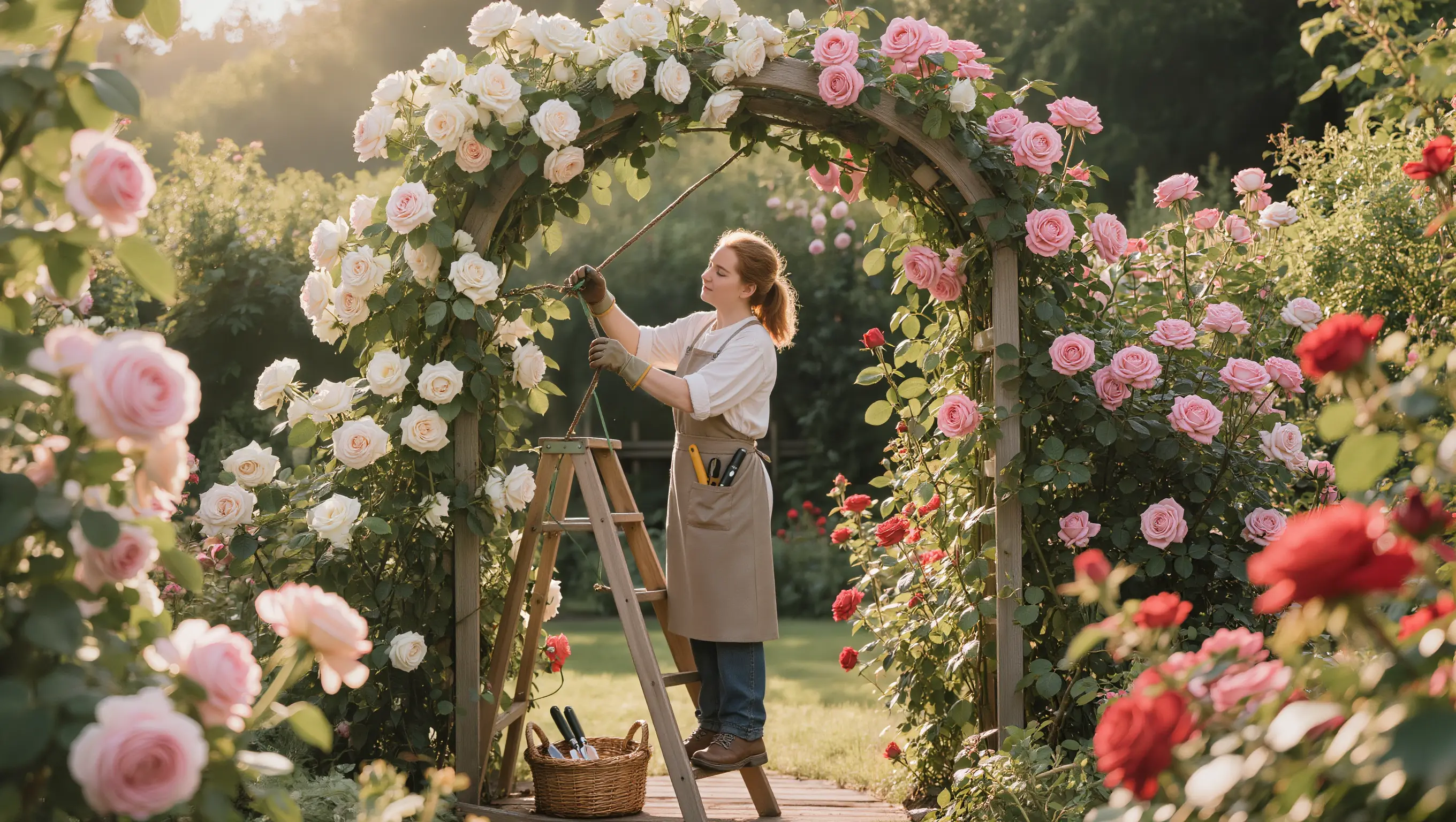
A rambling rose plant is one of those garden choices that looks effortless once it’s established—but getting it there takes a bit of patience, especially in the first year. Unlike compact rose varieties, rambling roses grow quickly and unpredictably, often sending long flexible canes in multiple directions.
If you’ve ever seen a wall, arch, or fence completely covered in roses, there’s a good chance you were looking at a rambling rose in its full glory.
This guide walks through how to plant, train, and maintain a rambling rose plant in a practical way—based on what actually works in real gardens, not just theory.
Quick Picks
- Plant Ties: Adjustable Garden Plant Ties, £11.74 £15.62
- Shape Healthy Growth: Heavy-Duty Pruning Shears, £10.96 £14.64
- Protect Your Hands: Leather Gardening Gloves, £13.50 £21.97
Quick Quiz: Is A Rambling Rose Plant Right For You?
Before you start planting, quickly check a few things. This will help you avoid choosing the wrong setup or expectations.
Do you have the right space?
Rambling roses need room to spread. A full wall, fence, arch, or large structure works best. A small balcony or narrow windowsill is usually not enough.
When do they bloom?
Most rambling roses bloom heavily once a year, usually in early summer. After that, they focus on growth rather than constant flowering.
Can you start from seeds?
Technically yes, but it’s not ideal for beginners. Most people start with young plants or bare-root roses because they establish much faster and more reliably.
How much care do they need?
Low to moderate. They don’t need daily attention once established, but they do need early training, seasonal pruning, and basic feeding.
Are they pet-friendly?
Generally considered non-toxic, but thorns can be a physical hazard for pets that like to explore or chew plants.
Do they attract insects?
Yes—like most roses, they can attract bees (good for pollination) and occasionally aphids. Nothing unusual, but some light maintenance may be needed.
Before You Start: What You’ll Need
Having the right tools makes a big difference, especially because rambling roses grow fast and need early structure.
Here’s a simple setup:
Gardening gloves (thick ones—rambling roses have serious thorns)
Pruning shears (sharp and clean)
Garden spade or shovel
Compost or well-rotted manure
Garden ties or soft plant ties
Trellis, arch, fence, or support structure
Watering can or hose with gentle spray
Mulch (bark or organic mulch works best)
If you don’t already have these on hand, it’s usually easier to put together everything in one place rather than hunting for each item separately. Voghion carry a full range of gardening essentials, from basic planting tools to seasonal care items, and even simple home accessories like vases if you want to bring cut flowers indoors once your roses start blooming.
 Leather Gardening Gloves
£13.50 £21.97
Shop at Voghion Heavy-Duty Pruning Shears
£10.96 £14.64
Shop at Voghion Adjustable Garden Plant Ties
£11.74 £15.62
Shop at VoghionChoosing the Right Spot
Rambling roses are not picky, but they do best in:
Full sun or light partial shade
Well-drained soil
A space where they can spread freely
Rambling roses are surprisingly adaptable—they’ll tolerate light shade and aren’t overly fussy about soil—but they truly thrive in full sun with well-drained ground. More importantly, they need space. Not just physical space at ground level, but vertical and horizontal room to expand.
It helps to think of a rambling rose as a structural element rather than a decorative plant. Over time, it becomes part of the architecture of your garden. A bare wall, a plain fence, or an empty pergola can be completely transformed once the rose matures and fills out.
If planted too close to smaller shrubs or delicate plants, it will eventually dominate them. This isn’t a plant that stays politely in its corner—it spreads, climbs, and claims space. Planning for that natural behavior early on will save you from having to relocate or heavily prune later.
Planting Your Rambling Rose
The best time to plant is autumn or early spring when the soil is workable but not frozen.
Step-by-step:
Dig a hole twice the width of the root ball
Mix soil with compost or manure for nutrients
Place the plant so the base is level with the soil surface
Fill and gently firm the soil around it
Water deeply after planting
After planting, don’t expect fast visible growth above ground immediately. Most of the energy goes into root development first.
Training the Plant (This Is the Key Part)
Rambling roses don’t naturally grow “neatly.” If you leave them alone, they’ll still grow—but not in a controlled or visually pleasing way.
Start early:
Gently tie new shoots to your support structure
Spread canes horizontally when possible (this encourages more flowers)
Avoid forcing growth straight upward only
If there’s one step that truly defines how your rambling rose will look in the future, it’s training.
Left alone, the plant will grow—but it will grow in a loose, often tangled way. Early guidance helps you turn that natural vigor into something visually striking.
As new shoots develop, gently tie them to your support structure. Instead of encouraging everything to grow straight upward, try to guide some canes horizontally. This small adjustment has a big impact: horizontal stems tend to produce more flowering side shoots, which means a fuller, more dramatic display.
Think of it less as controlling the plant and more as collaborating with it. You’re simply nudging growth in a direction that benefits both structure and bloom.
Watering and Feeding
In the first year:
Water regularly (especially in dry periods)
Keep soil consistently moist but not soggy
After establishment:
Water less frequently, but more deeply
Feed once in early spring with rose fertilizer or compost
Rambling roses are surprisingly self-sufficient once established, but they still respond well to early care.
Pruning: Don’t Overthink It
One of the biggest mistakes people make is over-pruning.
Rambling roses typically bloom on last year’s growth, so aggressive pruning can reduce flowers.
A simple rule:
Remove dead or weak stems
Cut back after flowering if needed
Don’t heavily prune every year unless the plant becomes too unruly
Think of pruning as shaping, not controlling.
Common Mistakes to Avoid
Many issues with rambling roses come down to early decisions rather than ongoing care.
Planting too close to small structures often leads to overcrowding later. Weak supports can collapse under the plant’s weight once it matures. Skipping early training results in tangled growth that’s harder to fix later. And perhaps most importantly, expecting a neat, compact shape will only lead to frustration.
Rambling roses are naturally a bit wild—that’s part of their appeal. The goal isn’t to make them rigid, but to guide that energy into something beautiful.
Patience Pays Off
A rambling rose plant is not an instant-result garden feature. It takes time, structure, and a bit of patience in the beginning.
But once it establishes, it becomes one of the most rewarding plants in a garden—turning plain walls or fences into dense, flowering layers that come back stronger every year.
The key is simple: guide it early, then let it do what it naturally wants to do.